
Is Fairlife Milk Healthy (From a Nutritionist)?
In this blog post, I’ll review the question of whether Fairlife Milk is healthy or not. Find out this product’s nutrition pros and cons and some better options you can consider. For most people, Fairlife Milk is considered a processed food and less healthy than regular milk due to the processing it undergoes.
Is Fairlife Milk Better Than Regular Milk?
Fairlife milk and regular milk start the same way, but they end up very different.
Fairlife is ultra-filtered, which means some of the water and lactose are removed while protein is concentrated. Regular milk is pasteurized and homogenized, but not filtered to change its nutrient ratios.
Here is a simple comparison to help you decide what works best for you.
Fairlife milk
- Higher protein per serving
- Lower natural sugar due to lactose removal
- Lactose-free due to added lactase enzyme
- More processed
- Not organic
Regular milk
- Naturally balanced protein, fat, and carbs
- Contains lactose
- Less processed
- Organic options widely available
My opinion
If you are lactose intolerant or want a higher-protein option, Fairlife can be a convenient choice. If you tolerate dairy well and want a less processed food, organic regular milk is usually the better everyday option.
It really comes down to digestion, priorities, and how often you plan to drink it.
Fairlife Milk Facts
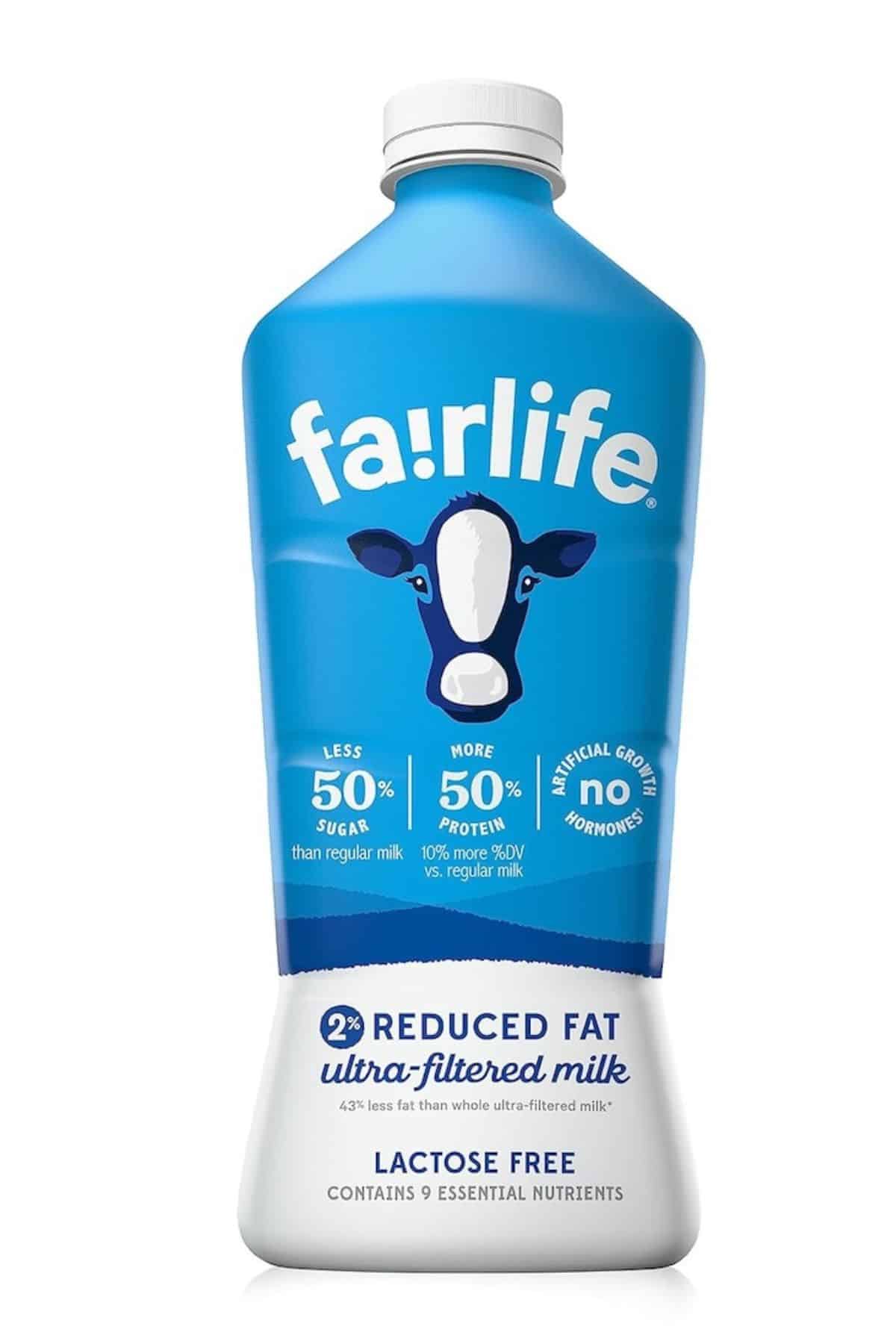
Fairlife Milk is a brand of ultra-filtered milk that boasts higher protein and lower sugar content than regular milk. It is a product of Fairlife LLC, a subsidiary of The Coca-Cola Company.
Ultra-filtration does not add protein to milk. It concentrates the protein that is already there by removing some of the water and lactose. This is why the protein number looks higher on the label.
The typical protein content of an 8-ounce serving of Fairlife Milk is around 13 grams, which is approximately 50% more protein than regular milk. Fairlife Milk contains approximately half the natural sugar of regular milk, with only 6 grams per 8-ounce serving (these are natural sugars in milk known as lactose).
There is not a significant difference in calories between regular milk and Fairlife milk.
Fairlife milk is available in 52-ounce and 14-ounce bottles and the following varieties at grocery stores:
- 2%
- 2% Chocolate
- Fat-free
- Whole
According to the nutrition label, Fairlife milk provides around 30% of the daily recommended (daily value) calcium intake per serving. It is also fortified with vitamins A and D and contains lactase, making it lactose-free and suitable for people who are lactose intolerant.
Fairlife Ingredients
All Fairlife Milk products contain ultra-filtered milk that is either whole, reduced fat, or non-fat. They also contain lactase enzymes, essential nutrients, and vitamins. There are no organic versions of Fairlife milk.
Fairlife’s 2% Reduced Fat Ultra-Filtered Milk contains the following ingredients:
- Reduced fat ultra-filtered milk
- Lactase enzyme
- Vitamin A palmitate
- Vitamin D3
Fairlife’s Chocolate 2% Reduced Fat Ultra-Filtered Milk contains the following ingredients:
- Reduced fat ultra-filtered milk
- Sugar
- Alkalized cocoa
- Lactase enzyme
- Dipotassium phosphate
- Salt
- Acesulfame potassium
- Carrageenan
- Natural and artificial flavors
- Sucralose
- Vitamin A palmitate
- Vitamin D3
Let’s take a closer look at some of the ingredients and what they might mean for your health.
Grade A Ultra-Filtered Milk
This is the primary ingredient. Grade A ultra-filtered milk is a type of cow’s milk that has undergone a filtration process to remove impurities and increase its protein content. The ultra-filtration process removes some of the sugars while concentrating the protein and other nutrients.
Fairlife milk lasts longer than regular milk because of its filtration and pasteurization process. These steps reduce spoilage-causing bacteria, which extends shelf life without preservatives.
Despite having less sugar, a higher protein concentration, and a longer shelf life compared to traditional milk, there are potential health risks associated with ultra-filtered milk that you should know about.
One concern is the loss of certain beneficial nutrients during filtration, which may reduce its overall nutritional value. Another issue is that filtering milk transforms it into a processed food.
Lactase Enzyme
Lactase enzyme is commonly used as a milk additive or a supplement. It breaks down lactose, the natural sugar found in dairy products, making milk more digestible for individuals with lactose intolerance.
While lactase enzyme supplementation in milk helps many people enjoy dairy without discomfort, there are potential health concerns. Some people are sensitive to enzymes or other components in the milk.
Excessive consumption of lactase-treated milk may lead to an over-reliance on the product. Over time, it can mask symptoms of lactose intolerance and hide other underlying digestive issues.
Some experts caution that the long-term effects of regularly consuming lactase-treated milk are not yet fully understood – it’s important to exercise moderation and be aware of individual health needs when incorporating products that contain additives into your daily diet.
Vitamin A Palmitate and Vitamin D3
Vitamins A and D are commonly added to milk products by the dairy industry as fortification agents to enhance the nutritional profile.
Vitamin A supports vision, immune function, and skin health, while vitamin D aids calcium absorption and bone health. While these additions may be beneficial, too much of it can lead to health risks.
Excessive vitamin A may result in toxicity, causing symptoms like nausea, dizziness, and even liver damage. Too much vitamin D intake can cause hypercalcemia, characterized by symptoms like nausea, weakness, and kidney problems.
It’s essential to be mindful of your overall dietary intake of these vitamins, mainly if you eat other fortified foods or nutritional supplements. You’ll need to be especially mindful if you are pregnant.
Sucralose and Acesulfame Potassium
The chocolate-flavored version of Fairlife Milk contains artificial sweeteners to enhance taste without adding extra sugar.
Acesulfame potassium and sucralose are artificial sweeteners commonly used by food manufacturers as sugar substitutes in various food and beverage products.
While they offer the advantage of providing sweetness without the added sugar, there are potential health risks associated with their consumption. Acesulfame potassium has been linked to concerns regarding its safety in high doses, with scientific studies suggesting a possible link to cancer.
Although regulatory authorities have deemed sucralose safe for human consumption, some studies have raised questions about its effects on gut health and metabolism, particularly when consumed in large quantities.
Dipotassium Phosphate
Dipotassium phosphate is a food additive commonly used as an emulsifier, stabilizer, and buffering agent in processed foods, beverages, and dietary supplements.
While it is generally recognized as safe by regulatory agencies when used by Good Manufacturing Practices (GMP), there are potential health risks associated with its consumption in large quantities or by sensitive individuals.
Excessive intake of dipotassium phosphate may disrupt the body’s mineral balance, potentially leading to electrolyte imbalances and related health issues.
Additionally, some research suggests that phosphates in processed foods may contribute to adverse health effects such as cardiovascular disease and impaired kidney function, particularly in people with pre-existing health conditions.
Nutrition Pros
As a lactose-free alternative to traditional dairy milk, Fairlife Milk provides a solution for those with lactose intolerance. It allows them to enjoy the taste and nutritional benefits of milk without discomfort.
It is also enriched with extra protein compared to regular milk, making it an option for those looking to increase their protein intake for muscle recovery, weight management, or overall health.
But, due to its processing, it is not considered a clean product and is considered a processed food.
Nutrition Cons
Despite the higher levels of protein and its suitability for people who are lactose intolerant, Fairlife Milk comes with some nutrition cons.
One concern is its highly processed ingredients, including the ultra-filtration process.
Fairlife Milk is also not organic, which means it may contain residues of pesticides used in conventional dairy farming (the Fairlife website does state that the types of milk it uses does not contain antibiotics or RBST growth hormones).
For those who can tolerate milk, it’s best to consider factors like how it was processed, the potential health risks compared to its health potential, and what else it contains.
A better choice would likely be regular low-fat or full-fat dairy milk for most people and children.
For those who cannot tolerate dairy, then there are lots of dairy-free milk options available (see my list of dairy-free milk recipes that are easy to make and budget-friendly too).
FAQs
For most healthy adults, having Fairlife milk occasionally or even daily can be fine. That said, it is still a processed food. Additionally, if you are sensitive to dairy products, it may not be healthy or safe to consume Fairlife (or any milk).
Yes. Although Fairlife Milk is generally considered safe for consumption by people who are not allergic or intolerant to milk, there are potential risks and side effects. Fairlife Milk is a highly processed food product, and it is a dairy product.
Some people experience digestive discomfort or allergic reactions to ingredients in Fairlife Milk, especially if they are sensitive to dairy. Additionally, the ultra-filtration process used in Fairlife Milk may alter its nutritional composition and could potentially concentrate contaminants present in the milk.
Yes, ultra-filtered milk is considered a processed food. It undergoes filtration, passing through specialized filters to remove components such as water, lactose, and minerals while concentrating protein and other nutrients. This process alters the composition and characteristics of the milk, resulting in a product with higher protein content and potentially extended shelf life compared to traditional milk.
While ultra-filtered milk retains many of the nutritional benefits of regular milk, its processing distinguishes it as a processed food. Processing methods like ultra-filtration can affect the final product’s taste, texture, and nutritional profile.
Yes. Fairlife milk is lactose-free because it contains added lactase enzyme, which breaks down lactose.
This makes it easier to digest for people who are lactose intolerant, though it does not make it dairy-free.
No. Fairlife milk is not organic. The company states that their milk does not contain added growth hormones or antibiotics, but it does not meet organic certification standards.
More Product Reviews You Might Like


Conclusions
Fairlife Milk is a processed dairy product, and the chocolate-flavored version contains added ingredients that are not considered healthy. Although ultra-filtered milk still has some nutrition, it’s important to consider factors such as added ingredients and any potential changes in nutritional content that may result from processing.
If you can tolerate dairy, organic, whole milk may be a better option. However, it’s important to note that this option has associated health risks. It’s best to research before including any dairy in your diet. Other options include plant-based milk alternatives or increasing your protein intake with organic meat, fish, eggs, or plant-based protein sources.
Be sure to speak to your healthcare provider or a nutrition professional to help determine if lactose-free milk like Fairlife is healthy for you.
Don’t forget to join my newsletter list to get exclusive clean eating recipes and tips. The newsletter is 100% free with no spam; unsubscribe anytime.
About the Author: Carrie Forrest has a master’s degree in public health with a specialty in nutrition and is a certified holistic nutritionist. She is a top wellness and food blogger with over 5 million annual visitors to her site. Carrie has an incredible story of recovery from chronic illness and is passionate about helping other women transform their health. Send her a message through her contact form.
Note: this post is for informational purposes only and is not intended as medical advice. Please consult your healthcare provider for recommendations related to your individual situation.